How to Diagnose Electrical Shorts in Cars

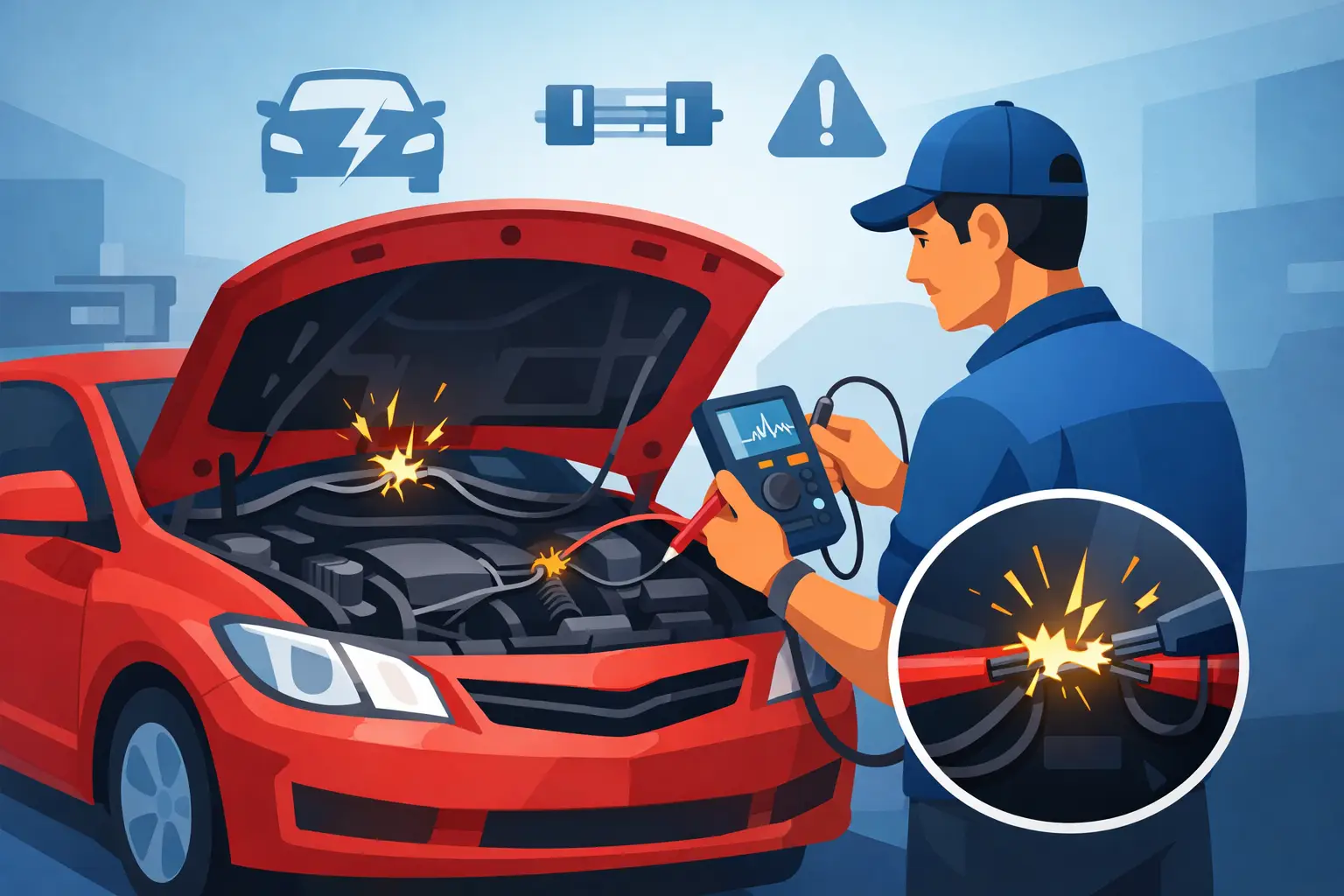
A blown fuse that comes back instantly is not a parts problem. It is a circuit problem. If you need to know how to diagnose electrical shorts in a vehicle, the fastest path is not guessing at switches, modules, or harness sections. It is following the circuit, loading it correctly, and isolating the short one section at a time.
Electrical shorts waste time because they hide behind trim, tape, and shared power feeds. They also get misdiagnosed because technicians often replace the component named on the fuse label instead of testing the entire branch. A fuse marked RADIO may also feed the amplifier, display, USB hub, steering wheel controls, or retained accessory power circuit. That is why the wiring diagram matters before anything gets unplugged.
What an electrical short actually is
In automotive diagnostics, a short usually means power is finding an unintended path to ground before it reaches the normal load. That causes excessive current flow, which blows the fuse, overheats wiring, shuts down a driver in a control module, or creates intermittent behavior.
There are a few versions of the same problem. A short to ground is the classic fuse-blower. A short to power can backfeed another circuit and create strange symptoms, such as lights glowing dimly or components operating with the key off. Then there is a partial short, where damaged insulation or corrosion creates resistance and heat without an immediate fuse failure. The test approach changes slightly depending on which one you suspect.
Before you start testing
Do not start with a new module or a bigger fuse. Start by confirming the complaint and collecting the exact conditions that trigger it. Does the fuse blow with the key on, only when a switch is pressed, only while driving, or after rain? That detail tells you whether to look at a constant feed, an ignition feed, a load-side branch, or a harness movement issue.
You also need the correct wiring diagram for the exact year, make, model, engine, and option content. Circuit routing changes more often than many people expect. Connector locations, splice packs, fuse assignments, and wire colors can all vary within the same model line. A general diagram is better than nothing, but the right one is what saves labor time.
Basic tools are enough if you use them properly: a digital multimeter, a test light, a fused jumper, a short finder or current tracer if you have one, and a breaker-style fuse buddy or resettable circuit protector. The resettable breaker is especially useful because it lets you cycle the fault without burning through a handful of fuses.
How to diagnose electrical shorts without chasing your tail
The cleanest method is to divide the circuit into sections and eliminate them one by one. That starts at the fuse and moves downstream.
First, identify everything powered by the failed fuse or affected branch. Do not assume the label tells the whole story. The diagram will show every splice, connector, module, and load on that feed. Once you know the branch layout, you can disconnect loads one at a time and see whether the short remains.
If the fuse blows immediately with all loads connected, replace it with a resettable breaker or an ammeter-safe test setup. Then unplug the most accessible downstream loads first. If unplugging a component stops the breaker from tripping, that does not always mean the component is bad. It may simply mean the short is further down that branch and unplugging the component opened the path.
That is why connector strategy matters. Instead of unplugging random parts, unplug at branch points shown in the diagram. If you disconnect a connector halfway through the harness and the short disappears, you just narrowed the fault to everything beyond that point. If the short remains, the problem is between the fuse block and that connector.
Use a test light in place of the fuse when appropriate
A test light across the fuse terminals can be useful on a dead short to ground. With the circuit energized, the light stays bright while the short is present. As you unplug sections or move the harness, the light will dim or go out when the short opens. This is often faster than replacing fuses.
The trade-off is that low-current or module-controlled circuits do not always like this method. Some networks, sensor references, and solid-state outputs can be damaged or misread if you force current through them incorrectly. On those circuits, stick to the diagram and use meter-based testing instead of improvising.
Check resistance only with power removed
Resistance checks can help, but only if the circuit is de-energized and you understand what else is connected. Measuring resistance to ground on a live or module-linked circuit can give misleading numbers because you are reading through bulbs, motors, control units, or parallel branches.
For a simple power feed short to ground, remove the fuse, disconnect the battery if needed, and measure the load side of the fuse to chassis ground. Near-zero resistance suggests a direct short, but the number alone will not tell you where it is. You still have to isolate the harness by disconnecting connectors and branch points.
Common short locations technicians find first
Most automotive shorts happen where the harness moves, rubs, gets wet, or has been disturbed during prior repairs. Door jamb boots are common because the wiring flexes every time the door opens. Trunk and liftgate harnesses fail for the same reason.
Underhood harnesses often short near brackets, battery trays, engine covers, and aftermarket accessory wiring. Areas near exhaust components can melt. Under-seat wiring gets crushed or chafed by seat tracks. Trailer wiring repairs, audio installs, remote start systems, and alarm splices are frequent problem sources because they introduce non-factory connections.
Water intrusion changes the game. If the short appears after rain or washing, check kick panels, sunroof drain paths, body control module areas, and rear body harness connectors. Corrosion can create both direct shorts and intermittent leakage paths that only show up under certain humidity conditions.
How to diagnose electrical shorts that are intermittent
Intermittent shorts are harder because the circuit may test fine in the bay. In those cases, recreate the operating condition. Move the harness while monitoring the breaker, test light, or current draw. Open and close doors, tilt the steering column, shake under-seat harnesses, and flex trunk loom sections. Heat and vibration matter, so an issue that only appears on the road may need a harness inspection under load rather than a static meter check.
A thermal clue can help. On a protected circuit with a resettable breaker, the shorted section may warm up before the breaker cycles. You still need caution here. Do not let the circuit overheat, and do not use an oversized protection device to force the fault to reveal itself.
If a module output is involved, do not assume the module is the problem unless the short is verified after disconnecting the load side. Many driver failures are the result of a harness or actuator pulling current beyond what the module can handle.
Why wiring diagrams save hours
Without a diagram, electrical short diagnosis turns into trim removal and guesswork. With a proper diagram, you know fuse numbers, splice locations, connector IDs, ground points, wire colors, and branch paths before touching the vehicle. That changes the job from hunting to isolating.
For example, if one fuse powers the instrument cluster, HVAC control head, and a body module branch through a splice behind the right kick panel, you can go straight to that splice area and split the circuit there. That is much faster than removing half the dash because the symptom mentions the cluster.
For shops working across multiple brands, exact documentation matters even more. Connector pinouts, module naming, and fuse architecture vary widely between domestic, Asian, and European vehicles. If you need make-specific diagrams and schematics fast, AutoCarData gives you instant downloadable access so you can start diagnosis without waiting on a full manual subscription.
Mistakes that slow the job down
The biggest mistake is replacing blown fuses repeatedly and calling that testing. The second is replacing the component named on the fuse legend without tracing the whole branch. The third is overlooking prior repair work, especially aftermarket wiring or recent body repairs.
Another common error is forgetting shared circuits. A short on one branch may take down multiple unrelated features because they share a feed, splice, or module wake-up line. If the symptoms seem unrelated, that usually means the circuit architecture is broader than the complaint description.
Patience matters here. A short can be obvious, like a rubbed-through wire at a hinge, or it can be buried in a loom where the harness touches a bracket only when the engine torques over. The process has to stay logical either way.
A good electrical diagnosis is not about finding the bad wire by luck. It is about narrowing the circuit until there is only one place left to look. Get the right diagram, split the branch methodically, and let the circuit tell you where the fault is.